

26 Mar The foundations of dog training, part 2 – Criteria and reinforcement rate
In the previous article we discussed rewards and timing. Another fundamental pillar of training is the level of requirement, also known as the criterion, and the rate of reinforcement. These two are closely connected. The criterion directly affects the reinforcement rate and the reinforcement rate tells you whether the criterion is appropriate or not.
Any skill you train should always be broken down into smaller steps or criteria. By reaching these criteria one at a time you gradually move toward the final goal, which is the completed behavior. You should never require or expect the dog to perform the finished behavior perfectly right away.
The criterion must be set at the right level
During training the handler sets a specific criterion that the dog must reach in order to receive a reward. The trainer must always have this requirement very clearly in mind. If the criterion has not been defined or if it is unclear to the trainer, the entire learning situation becomes frustrating for the dog. The dog cannot know what behavior earns a reward and what does not.
Setting criteria always requires planning. It can be challenging if you do not clearly know what the finished behavior should look like. That is why it is essential to know exactly what you are aiming for and how you will teach it to the dog in small pieces. Each criterion is simply a step along the path toward the final performance.
These steps should never be skipped. If they are, there is a risk that the final behavior will turn into something completely different from what was originally planned. The more complex and demanding the final behavior is, the more intermediate steps you should include. The trainer’s job is to design the training so that the dog always has a chance to succeed and reach each criterion.
For a dog to remain motivated to work, rewards must come regularly. If the criterion is too difficult, the dog cannot succeed and therefore does not receive a reward. Dogs offer behaviors that are worthwhile to them. If a behavior does not lead to a reward, the desired learning will not occur.
To maintain a sufficiently high reinforcement rate, food rewards are often used in small pieces so the dog does not become full too quickly. Other types of rewards usually become more practical later when the behavior is already fluent.
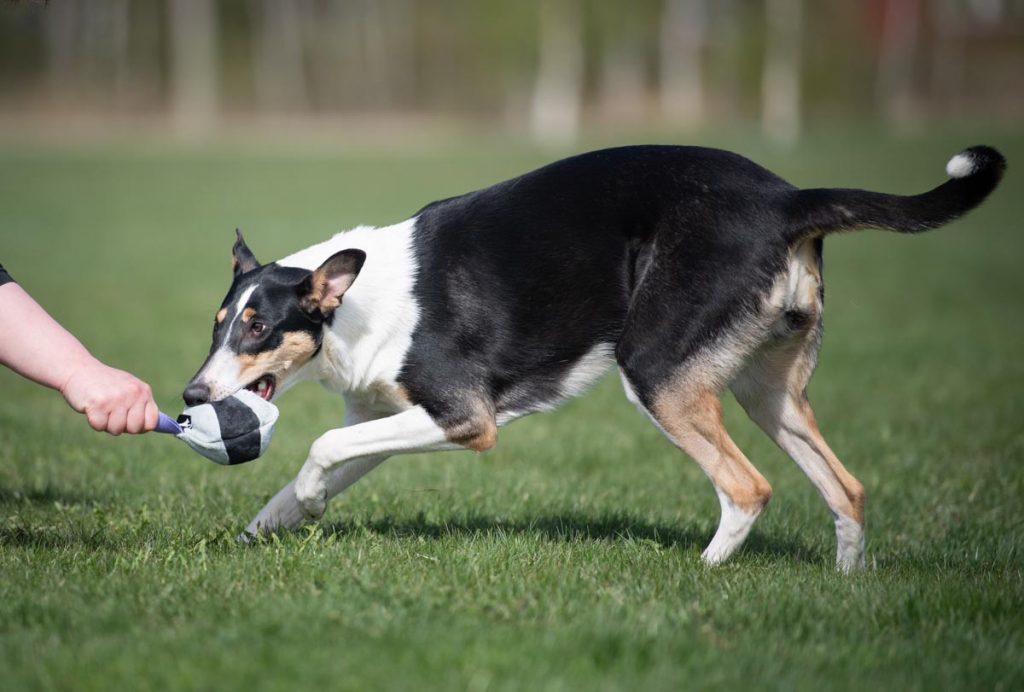
Setting the correct criterion can be difficult if you are not sure what the final behavior should look like yourself.
Raising and lowering the criterion
To make progress and avoid getting stuck, the criterion must be raised at the right time. A useful rule of thumb is that when the dog succeeds about eight times out of ten, it is time to make the task more difficult and move to the next criterion.
It is important to remember that changing the environment can also count as raising the criterion.
Adjusting the criteria should always be based on the individual dog. Some dogs learn certain stages quickly and if you remain at the same step too long the final behavior may never develop. Other individuals are more sensitive and need many successful repetitions and a strong sense of confidence at each stage before moving forward.
Only one requirement at a time
It is extremely important that the dog has only one requirement at a time during training.
Take heelwork as an example. Trainers often try to teach multiple criteria simultaneously. The dog must walk in the correct position, maintain eye contact and hold the correct posture. On top of that, duration is often added and gradually increased while all of the previous criteria are still being trained.
Not surprisingly, the dog becomes confused and the training does not progress. In such cases the behavior has simply not been broken down into small enough pieces.
Any skill should always be divided into smaller criteria. By achieving each of these steps one by one you move toward the final performance. You should never expect a dog to perform the finished behavior perfectly right away.
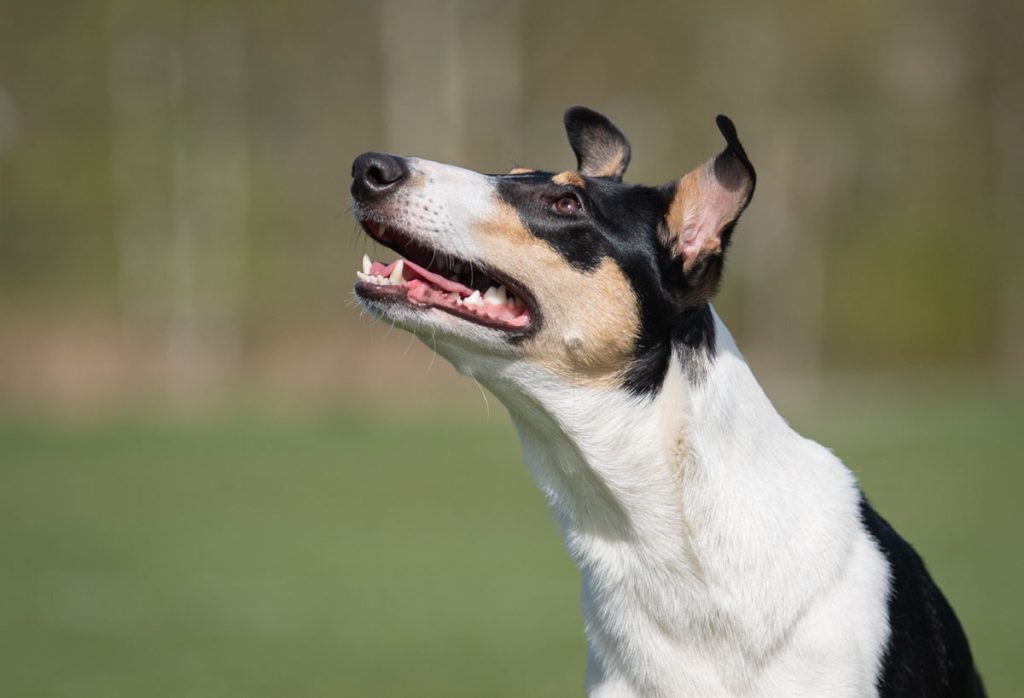
Training progresses and the dog remains motivated only when the dog succeeds.
Reinforcement rate
Reinforcement rate refers to the amount of time between each reward the dog receives. Training only progresses and the dog stays motivated when it succeeds. That means rewards should come frequently. If the interval between rewards becomes too long, the dog may no longer even remember what behavior it was last rewarded for. The higher the reinforcement rate, the more motivated and focused the dog will be while working.
The reinforcement rate is an honest indicator of whether the criterion is appropriate. A good reinforcement rate is roughly every five seconds, which equals about twelve rewards per minute. If the reinforcement rate becomes too high, it may be time to raise the criterion. If it becomes too low, the criterion is likely too difficult for the dog to reach.
In simple terms, if you cannot reward the dog, the criterion is too high. If you are rewarding continuously without pause, the criterion is too low.
A high reinforcement rate is always desirable, although learning can still occur at a slower pace. It will simply take longer. To realistically deliver rewards about every five seconds, trainers often use small food rewards so the dog does not become full too quickly. Other reward types usually come into play later when the behavior becomes fluent.
Evaluate the criterion and reinforcement rate during breaks
The reinforcement rate should be monitored throughout the training session. During breaks, the trainer should specifically evaluate both the criterion and the reinforcement rate. Based on this evaluation you can immediately adjust the training by raising or lowering the criterion or keeping it the same.
Keeping simple records is an excellent way to evaluate progress. For example, if you perform three sets of five repetitions, you can write down how many successes occurred after each set of five. From this you can directly calculate what your next step should be. Training can sometimes be quite mathematical.
A good rule of thumb is that if about 80 percent of repetitions succeed, you can raise the criterion. If more than half of the repetitions fail, the criterion may need to be lowered.
Recording results and taking frequent breaks may initially feel difficult or even disruptive to training. However, a short pause after every five repetitions can prevent many mistakes. One major benefit is that the dog does not accidentally repeat incorrect behaviors multiple times and learn the wrong thing or a flawed version of the behavior.
In dog training the familiar principles apply very well:
“Prevention is always easier.”
“Well planned is half done.”
Original author Piia Collan, 16 June 2022
Author Piia Collan
Piia Collan is a professional dog trainer based in Vääksy, Finland, working with dogs and their people at every stage of life. She helps build strong everyday skills, balanced training routines and a deeper cooperation between dogs and handlers — from puppies to adult and senior dogs. Piia’s approach is tailored to each dog and family, grounded in modern, dog-friendly training methods that support both learning and overall well-being. Her services are available locally, across Finland and internationally through online training and lectures. She offers private coaching, home visits, phone consultations, live online seminars and training courses. In addition, Piia provides exclusive in-home dog care, where dogs become part of her daily life during their stay. She also works closely with breeders and canine organizations, supporting responsible training and lifelong dog welfare.
Latest articles & product guides
- Joy of Dog Sports training toys: which dog training toy is right for your dog?
 Choosing the right training toy can make a surprisingly big difference to how much your dog enjoys playing and how useful the toy is in training. But with different shapes, sizes, fillings and designs available, how do you know which dog training toy is the…
 - Dog stress and recovery
 Dogs tolerate stress differently depending on factors such as their genetics and personality, age and stage of development, intended purpose, health and previous experiences. Stress cannot be avoided completely and there is no reason to fear mild stress. Most dogs cope well even with intense…
 - When your dog turns out not to be easy
 Not every dog is easy. Not every story can be neatly put back together. Not every kind of difficulty fits under the same heading. There are the ordinary challenges of everyday life that almost every dog owner encounters. And then there are situations that begin…
 - The teenage dog phase
 Adolescence is a long developmental stage that begins when the sensitive socialization period ends and puppyhood comes to a close. Some dogs mature well before the age of two, while for others the process takes significantly longer. This long teenage phase can be filled with…
 - ProPack bag family comparison – Which dog sports bag is right for you?
 ProPack bag family comparison – Which dog sports bag is right for you? When you spend long days training dogs, travelling to competitions or balancing everyday life with active dogs, having the right dog sports bag makes a huge difference. A well-designed dog training bag…




No Comments